
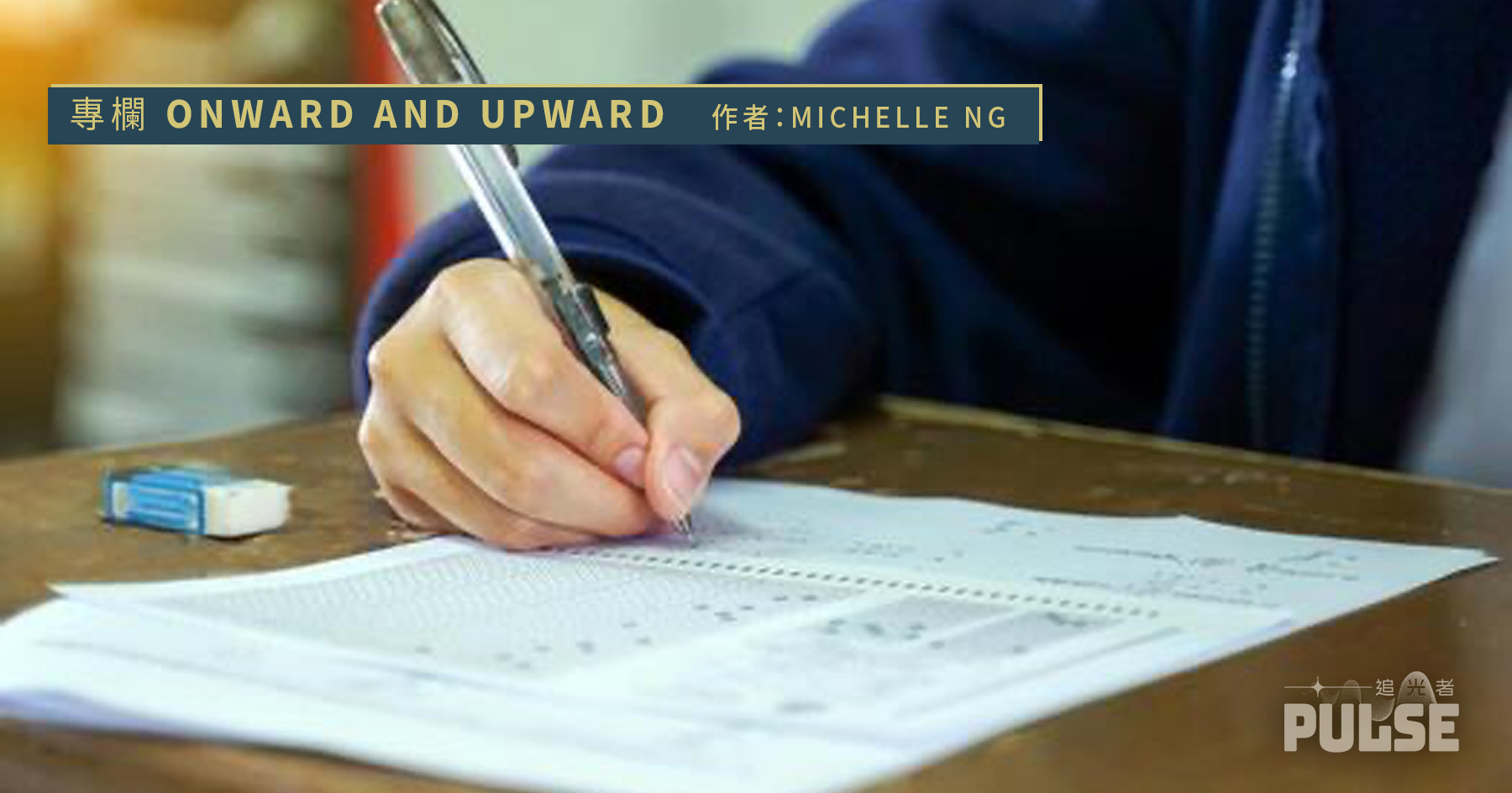
Whenever I guide students through the unseen poetry section of GCSE English Literature, I’m often reminded of the Chinese phrase “讀書心細絲抽蠶,” – it seems like students are expected to tease meaning from a text with the meticulousness of someone drawing silk from a cocoon.
To get an idea of the kind of clinical precision needed to score highly, compare the two responses below (the first written by a student, the second by me).
The student interprets the poem by taking note of only its most obvious details: the narrator is busy, she is tired, she likes nature. There is no attempt to dig deeper. I, by contrast, catch the poet’s hidden intentions. I notice that the poem is called “Woman Work” rather than “My Work,” and understand why that distinction matters. I pick up on the absence of a father, the coldness of the kisses, the telling way the speaker refers to her own children. I point out where cotton-picking falls in the list, and what its position might signify. None of these are features that scream for attention. In fact, they are easy to miss. This is precisely the point of literary analysis: the act of signalling that the writer’s coded message has been received.
GCSE English Literature question:
In ‘Woman Work’ how does the poet present the speaker’s feelings about her life? [24 marks]
Woman Work
By Maya Angelou
I’ve got the children to tend
The clothes to mend
The floor to mop
The food to shop
Then the chicken to fry
The baby to dry
I got company to feed
The garden to weed
I’ve got shirts to press
The tots to dress
The can to be cut
I gotta clean up this hut
Then see about the sick
And the cotton to pick.
Shine on me, sunshine
Rain on me, rain
Fall softly, dewdrops
And cool my brow again.
Storm, blow me from here
With your fiercest wind
Let me float across the sky
‘Til I can rest again.
Fall gently, snowflakes
Cover me with white
Cold icy kisses and
Let me rest tonight.
Sun, rain, curving sky
Mountain, oceans, leaf and stone
Star shine, moon glow
You’re all that I can call my own.
Student’s version
In the poem ‘Woman Work’, the speaker feels like she has too much to do. She lists all her chores in the first part of the poem. She says, “I’ve got the children to tend” and “The floor to mop.” This shows she is very busy and she has to look after everyone else.
The speaker feels tired because she has to do “The food to shop” and “The chicken to fry.” She also has to “pick the cotton.” This means she is working all day and night. The poem sounds like a list which makes it feel like she never stops working.
In the second part of the poem, she talks about the weather. She says “Shine on me, sunshine.” This shows she likes nature. She wants the rain and the snow to “let me rest tonight.” This means she is unhappy with her work and she just wants to go to sleep or be alone.
At the end, she says the “Mountain, oceans, leaf and stone” are all she can “call my own.” This means she doesn’t own her house or her work, she only owns the nature around her. She feels better when she is looking at the stars.
My version
In “Woman Work,” Angelou describes the sense of boredom and isolation that afflicts women living in a society that imposes domestic duties solely on their shoulders.
It is noteworthy that the poem is titled “Woman Work” and not “My Work,” which is Angelou’s way of suggesting that the feelings portrayed apply not to one particular woman but to womenfolk in general.
To highlight the tedium of household duties, the first 11 lines share the same structure: a task, followed by a verb (“The clothes to mend/The floor to mop/The food to shop”). The rhyme scheme – AABBCCDD, and so on – itself reflects the repetitive nature of domestic tasks, giving the reader the impression the tasks go on forever. The woman feels trapped in her own home.
To further emphasize the woman’s loneliness, Angelou employs contrast, devoting the remaining 16 lines to the woman’s sad attempt to liberate herself mentally. She behaves like a sorceress, calling in an imperative tone upon the forces of nature to soothe her (“Shine on me, sunshine/Rain on me, rain”). Whereas the first 14 lines are set in the suffocating confines of a home, the remainder of the poem is strictly outdoors, even extending to the universe towards the end (“Star shine, moon glow”). When she calls upon snowflakes to give her “cold icy kisses,” we are reminded that even though she has children, there is no presence of their father in their home, which also explains her feelings of isolation – it is ironic that the kisses she receives come not from a man but from abstract nature. It is equally ironic that while she labels “star shine” and “moon glow” as “all that I can call my own,” her children she merely refers to as “the children.” Though she tends to their physical needs, emotionally, she is detached from them.
Another detail worth noting is among the tasks Angelou lists in the first half of her poem, cotton-picking is placed last. Often, poets place an item at the end as a way to emphasise its importance. In this case, because cotton-picking is traditionally associated in the US with the labour of black slaves, its inclusion serves as a veiled reference to the narrator’s skin colour. She suffers the double whammy of being black and female, two groups the white patriarchal society is biased against. Angelou thus provides a wider social context in which to understand the narrator’s unhappiness.
Michelle Ng
英國牛津大學畢業,前《蘋果日報》和《眾新聞》專欄作家,現在身在楓葉國,心繫中國大陸和香港。
聯絡方式: michelleng.coach@proton.me
個人網站: https://michellengwritings.com