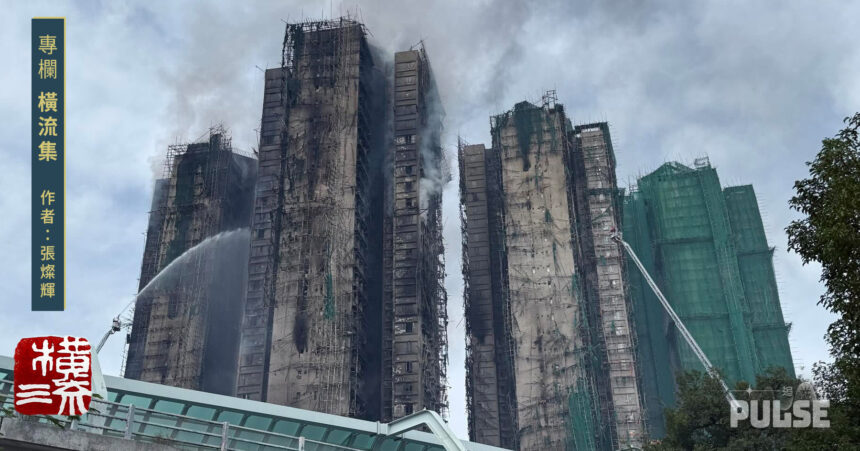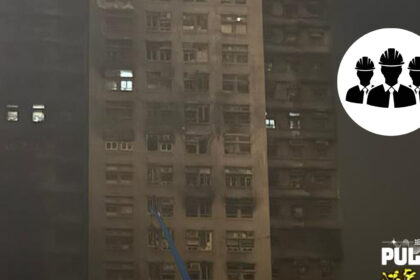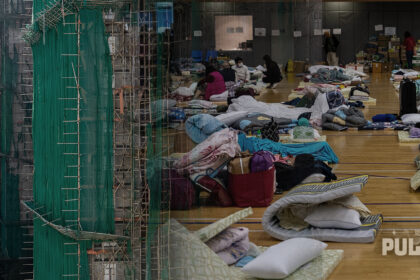


Following the major fire, the public—including ordinary citizens, academics, professionals, and former senior officials—have all called on the Hong Kong government to set up a statutory “Independent Commission of Inquiry” to thoroughly investigate the cause of the blaze; some advocates have even been arrested. Just when people thought the Chief Executive, John Lee, was finally “responding to public opinion,” he announced today (2 Dec) that he would only establish an “Independent Committee,” and not the legally mandated “Independent Commission of Inquiry” (CoI).
Lee’s idea is simply to “review” the causes of the fire and its rapid spread, and to “invite” a judge to “preside.” Former Legislative Council member Sin Chung Kai (單仲偕) analyzed that if the government fails to establish a statutory CoI, it means a significant reduction in accountability and requirements. He believes the authorities are attempting to use the word “independent” to appease public anger and “confuse the public” (i.e., “mix up the visual and auditory”) to lower the level of public dissatisfaction.
Chief Executive Announces “Independent Committee”
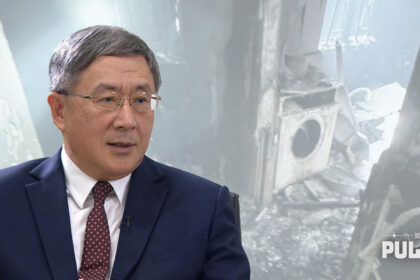
Before attending the Executive Council meeting, which was held for the first time since the fire, John Lee, dressed in a black suit and black tie, met with reporters. Unlike an earlier press conference where he mentioned firemen only at the end, Lee opened his remarks this morning by expressing sorrow for the deceased firefighters and gratitude for the Fire Services Department’s continuous rescue efforts, which successfully saved many residents. He described these “miracles of life” as being “guarded by the lives of the fire personnel,” and thus, “I first pay tribute and express endless gratitude to the firefighters who raced against time to save lives and tend to the injured.”
There has been persistent public demand for the government to establish a statutory Independent Commission of Inquiry to uncover the truth behind the fire. Lee proactively announced that he would establish an “Independent Committee” to “review” the cause of the fire, the rapid spread of the accident, and related issues. He will liaise with the judiciary to “invite” a judge to “preside” over the committee’s work, study its detailed scope of work, and assist its efficient operation, including how the government can provide more necessary information and execute work as required by the committee to support it in submitting recommendations and a report to the Chief Executive as soon as possible, thereby “helping the government deepen reforms.” He stressed that the investigation report would be fully public.
“Independent Committee” Differs from the Statutory “Commission of Inquiry”
However, what the public is calling for is specifically a statutory “Commission of Inquiry” (CoI), appointed by the Chief Executive in Council under the Commissions of Inquiry Ordinance (Cap. 86), which the media and public commonly refer to as an “Independent Investigation Commission.” Reviewing the Ordinance, it empowers the Chief Executive in Council to “appoint” commissioners or a chairman; to “inquire” into any matter of public importance; and the “appointment of a Commission shall be published in the Gazette.”
These terms differ significantly from Lee’s description of an “Independent Committee” where a judge is “invited” to “preside” and “review” the accident. Furthermore, when answering questions in English, he referred to establishing an “independent committee,” rather than the “Commissions of Inquiry” used in the Ordinance. The Gazer has inquired with the Chief Executive’s Office about the nature of the “Independent Committee” and whether it is being established under the Ordinance, but has not yet received a reply.
Sin Chung Kai: Using “Independent” to Appease Public Anger
Former Legislative Councillor Sin Chung Kai stated frankly that based solely on Lee’s remarks at the press conference, without explicit confirmation that the “Independent Committee” is being established under the Ordinance, it implies a lower threshold than a statutory CoI. Lacking the power to summon witnesses to testify under oath, he said, “If they are free, they will come; if not, they won’t,” and witnesses could potentially submit only written opinions. Even if the report is fully public, it is unclear whether all evidence will be disclosed as with a statutory commission. Therefore, its level of accountability and required compliance are far less than a statutory CoI. Sin believes the authorities’ approach is “inadequate” and overly “redundant” given the current internal cross-departmental task forces.
Sin added that the Chief Executive has the power to establish various committees. Since this is a non-statutory committee, its procedural rules can be customized according to its work needs, with no legal framework to follow. Analyzing John Lee’s comments, he believes the committee’s focus will be on “prevention” rather than “pursuing accountability,” a stance he believes has a “certain gap” from public expectations.
He further believes that besides seeking improvement recommendations, Sin hopes to use the word “independent” to appease public discontent and “confuse the public” to lower the voice of dissatisfaction. He sees this as a skillful attempt to “pull a trick” (i.e., “steal the sun and exchange the moon”) to avoid formally establishing a statutory CoI. Sin pointed out that while a statutory CoI takes time and imposes greater pressure on the government, it is exactly what the public expects—the “highest standard” approach to deliver justice to the deceased, the victims, and society.
Jason Poon: Expectation for Clarity on Format, Powers, and Transparency
Jason Chuk-Hung Poon, chairman of construction concern group CHINAT Monitor, who has consistently called for a statutory CoI, believes John Lee’s current statement is “unclear.” While he considers the move to include outsiders in the investigation a “good” concession, he is still not satisfied. He questioned which aspects of the legal framework the government is “willing to use and which it is not,” finding the situation “baffling.” He reiterated that if the committee operates behind closed doors and lacks transparency, it would be “mediocre.”
Poon hopes the authorities can clearly explain the format, procedures, and powers granted to the committee in the absence of a statutory framework. More importantly, he seeks “high transparency,” asking if it will reference the CoI for the Sha Tin to Central Link Hung Hom Station (South Extension), allowing the media to report daily progress to keep the public informed, and even allowing public participation.