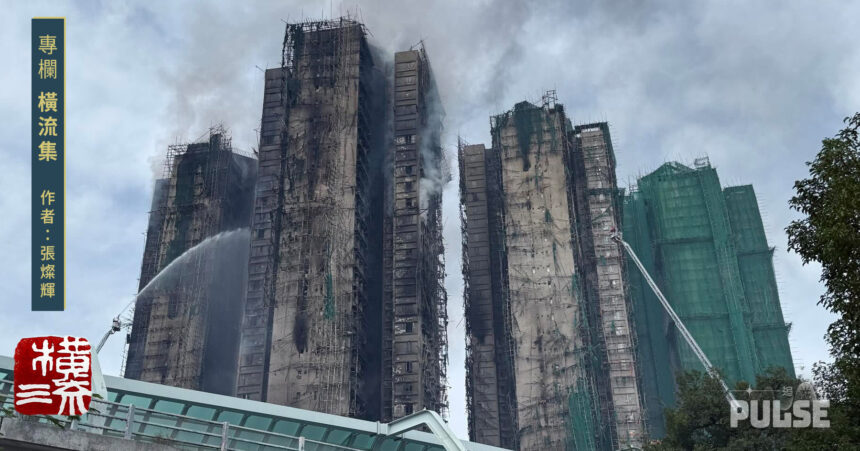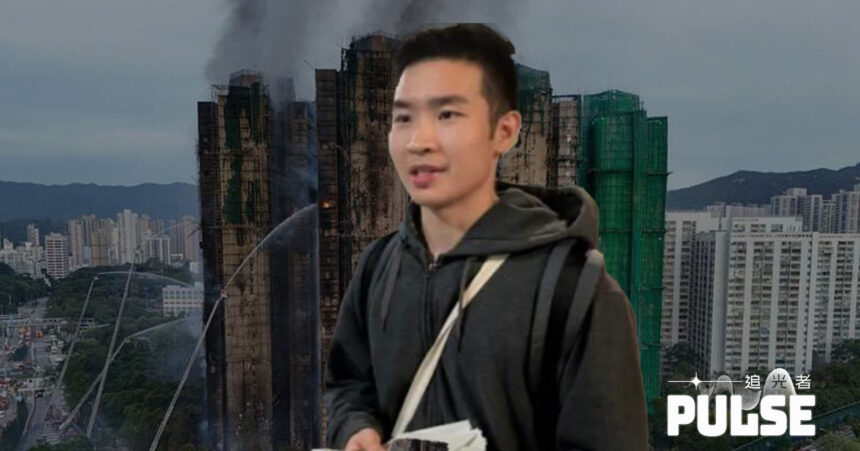

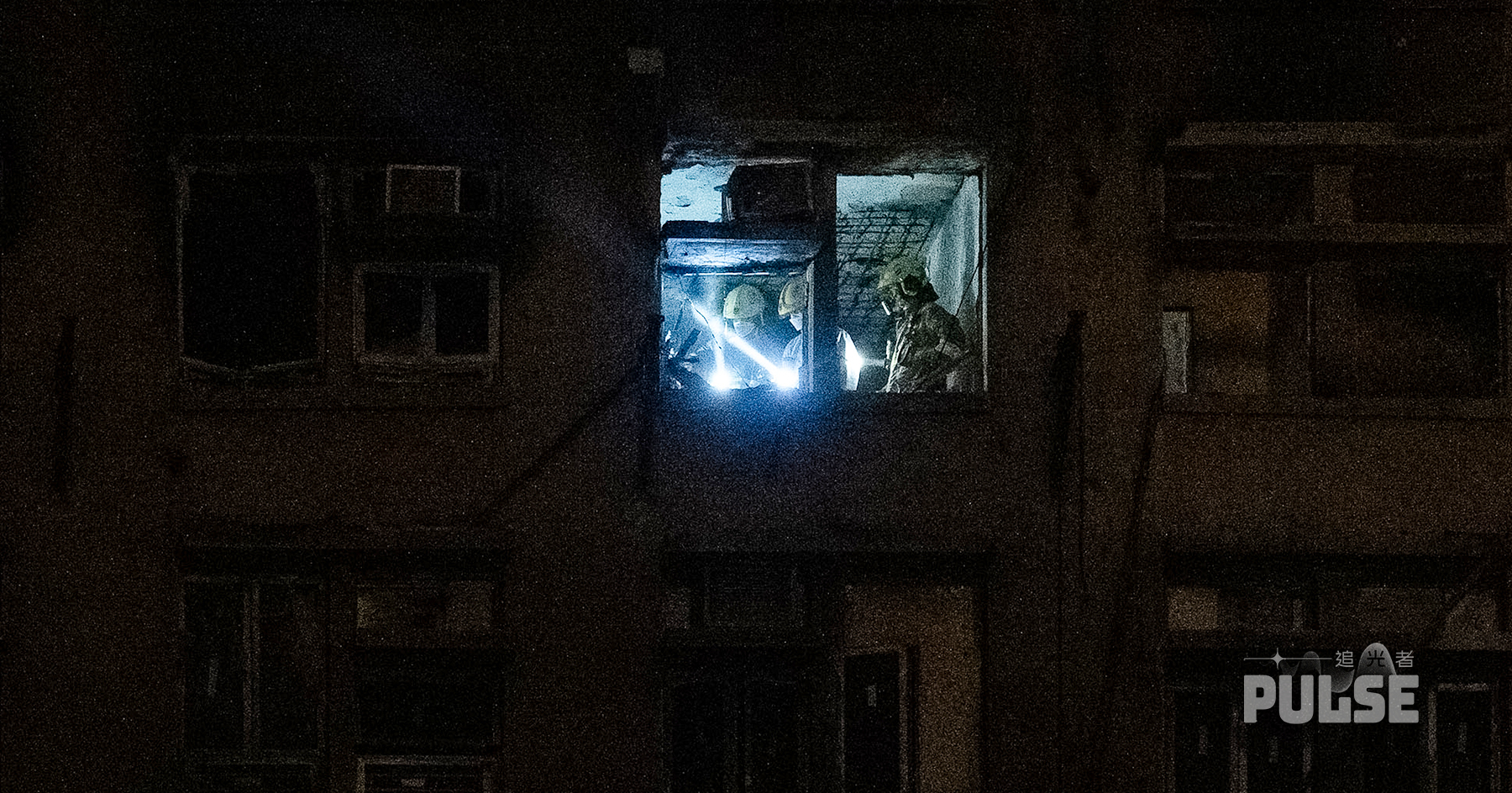
The Wang Fuk Court fire resulted in over a hundred deaths and thousands losing their homes. The government has announced the establishment of multiple task forces to investigate the incident. However, there is widespread public debate on whether the authorities should establish an Independent Commission of Inquiry, similar to the Garley Building fire, to uncover the truth and deliver justice to the deceased. The Gazer delves into the duties and importance of an Independent Commission of Inquiry.
According to the government’s current announcements, the Independent Commission Against Corruption (ICAC), the Housing Bureau, the Police Force, and a cross-departmental task force led by the Fire Services Department have all launched investigations into the fire. However, the scope of investigation for each department varies. Former Legislative Council member Sin Chung-kai (單仲偕) explains the difference between these departmental investigations and the highly-requested Independent Commission of Inquiry.
ICAC Investigates Corruption; Housing Bureau Investigates Works and Structure
The ICAC set up a dedicated team last Thursday (27th) to conduct a full investigation into potential corruption related to the major maintenance project at Wang Fuk Court, leading to the arrest of over 10 individuals, including project consultants and contractor principals. Sin Chung Kai, a former member of the ICAC Operations Review Committee, pointed out that the ICAC mainly handles corruption or bribery aspects of the project. While its findings are helpful, the overall investigation is relatively incomplete and is conducted non-publicly. For example, after an arrest operation, the public only knows who was apprehended but not who was investigated but not detained. Therefore, it cannot be compared to an Independent Commission of Inquiry.
The Independent Checking Unit of the Housing Bureau inspected the overall structural safety of several Wang Fuk Court blocks over the weekend and ordered the suspension of external wall maintenance work. The Unit also discovered that maintenance work at Yee Kok Court in Sham Shui Po used plastic sheeting to cover windows, demanding the contractor remove it and temporarily halting the work, with possible prosecution considered. Sin believes the Housing Bureau mainly manages policy and administrative operations. Strictly speaking, Wang Fuk Court is a sold HOS (Home Ownership Scheme) estate managed by an Owners’ Corporation, which should fall under the purview of the Home Affairs Bureau. While the Bureau’s internal review to improve future regulation is understandable, its investigation scope has less relevance to the core of the incident and is “far from seeking the truth.”
Regarding the Police Force, officers have been entering units to search for remains and collect evidence to understand the cause of the incident. Sin analyzed that the police’s duty is to investigate criminal acts other than bribery and corruption, such as when “something is clearly wrong but the violation of a specific ordinance cannot be pointed out,” which is then passed to the police for enforcement. Their focus is on finding out if anyone violated the law, which is rather broad.
Cross-Departmental Task Force May Face Criticism of “Self-Investigation,” Easily Distorting Conclusions
As for the cross-departmental investigation task force led by the Fire Services Department last week, its members include personnel from the Police Force, Buildings Department, Electrical and Mechanical Services Department, the Housing Bureau’s Independent Checking Unit, Labour Department, Government Laboratory, and fire engineering professionals. The investigation focuses on two main areas: the cause of the fire and its spread, and the factors leading to the large number of casualties.
Sin Chung Kai believes the cross-departmental task force is “closer” to an Independent Commission of Inquiry in taking a comprehensive view of the entire matter. However, he pointed out its biggest flaw: it operates behind closed doors, which may lead to the criticism of “self-investigation” and raise doubts about its credibility. He suggests the team could potentially “steer the conclusion” to align with the government’s interests or to cover up certain facts, for instance, by “distorting” the conclusion into a “man-made disaster caused by ten or eight coincidences.”
In the past, Hong Kong established Independent Commissions of Inquiry for various major accidents and governance crises. Sin explained that such a commission differs greatly from the government’s internal task forces. An Independent Commission of Inquiry is appointed by the Chief Executive in Council under the Commissions of Inquiry Ordinance. It is usually composed of three or more members, including judges, experts, and figures with high social credibility, supported by a secretariat.
Independent Commission is Open, Transparent, and Highly Credible – More Accepted by Society
Sin further stated that the Independent Commission of Inquiry has the power to summon witnesses, who cannot be absent and must testify under oath, with false testimony being a criminal offense. Secondly, it operates with high transparency “in the sunlight,” allowing the public and media to attend hearings and submit testimonies or evidence. Finally, the Commission must report to the public, detailing the people and events investigated, drawing conclusions and recommendations based on scientific findings, and even suggesting penalties for certain officials.
He believes the Commission’s most critical asset is its “credibility,” which surpasses all government internal investigation teams. Crucially, participants must not be involved in the incident, avoiding any suspicion of “backdoor dealings” or “self-investigation.” It is extremely difficult for the government to conceal facts or exert administrative interference, making its findings more readily accepted and “bought into” by society.
Sin frankly described establishing an Independent Commission of Inquiry as “revealing the government’s bottom card for public scrutiny.” He argued that in the past, a government seeking to restore credibility would “rush out and propose an independent commission” to show an impartial report—”those who need to be sacked are sacked, and those who need to be held accountable are held accountable.” He characterized the call for an independent commission as a “humble request,” and the current government’s “procrastinating” attitude is like “rubbing salt into the wound,” inevitably leading citizens to worry about “who they are trying to protect or conceal.”
︱Anthony Cheung: Independent Commission of Inquiry Deserves Consideration
Former Secretary for Transport and Housing, Anthony Cheung Bing-leung, told the Hong Kong Economic Journal that an Independent Commission of Inquiry has a “quasi-judicial” function that helps restore the truth. During the Leung Chun-ying administration, Cheung, who led the Transport and Housing Bureau, dealt with two Independent Commissions of Inquiry—the 2012 Lamma IV Ferry disaster and the 2015 lead-in-water crisis—and stated that he supported and urged colleagues to support the commissions at the time.
︱Pro-Establishment Opinions Differ: Commission Could “Put Out the Fire” of Public Anger
A current affairs column in the Hong Kong Economic Journal also reported that although there are differing views among top government officials, the door has not been completely “shut” on establishing an Independent Commission of Inquiry. However, opinions within the pro-establishment camp are divided. For example, Executive Council Convenor Regina Ip Lau Suk-yee believes the current departmental task forces may not be able to investigate the root causes and therefore supports inviting non-government figures to participate in a more comprehensive investigation.
︱Ronny Tong: Sees No Sign of Departmental Negligence; Internal Inquiries and Coroner’s Court are Sufficient
Executive Council member Ronny Tong Ka-wah, who was part of the “New Airport Investigation Committee,” stated that he does not currently see massive public outcry. He cited the example that the findings of the “New Airport Investigation Committee” contradicted other inquiries, suggesting that it might not necessarily lead to the truth. He believes that the government’s internal investigations, criminal investigations, and the future Coroner’s Court will be sufficient for the current fire, and he sees no immediate signs of departmental negligence.