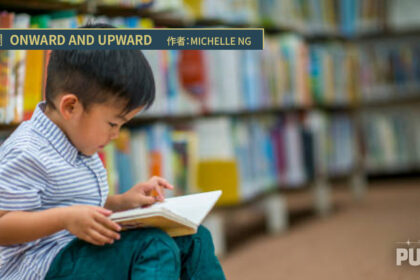

In my line of work as a private tutor, it is not unusual for parents to approach me with this problem at hand: their children (usually boys) are predicted to achieve the highest GCSE grades in subjects like maths, physics and chemistry, only for their attainment reports to be marred by a failing or barely passing grade in English.
The creative writing section of the GCSE English paper is often viewed as the most menacing, and some students cope by memorizing a pre-written story beforehand and then regurgitating it more or less directly onto their exam papers. This tactic may relieve them of the pain of writing from scratch in an exam setting, but that’s about it. It almost certainly can’t improve their grades, as examiners can usually immediately tell a shortcut was taken. Year after year, GCSE Examiners’ Reports have cautioned against taking this easy way out:
“Some students had leaned heavily upon ‘learned’ responses, the details of which are quickly recognisable and do not often add to their piece.” (AQA Examiner’s Report November 2021)
“There were some responses that had clearly been memorised and adapted for the topic of the question, so were not entirely relevant.” (Edexcel Examiner’s Report June 2022)
“There was some evidence of ‘prepared’ stories being used as batches of candidates produced identical responses. This is not in the spirit of the examination and can be counter-productive in preventing candidates from showing what they can really do.” (Eduqas Examiners’ Report Summer 2024)
The message is clear: writing on cue matters in exams. One solution to dealing with creative writing exams is to borrow from a trick well-known among professional writers: Write what you know. Instead of adapting the given topic to a pre-memorized story, connect it to a field you’re familiar with. This way, instead of having to invent details on the spot, you can simply draw on your existing knowledge. Your mental bandwidth can then be totally devoted to writing the story.
This past week I worked on this GCSE creative writing topic with a student:
Write the opening of a story that begins with the line:
“No one else seemed to notice, but something was definitely wrong.”
You may wish to include:
a sense of mystery or tension
the setting
the character’s reaction
As I mulled over how to respond, it suddenly struck me that I could take advantage of my extensive knowledge of dermal fillers – over the years I’ve done enough research to know I should stay away from them – to whip up a story that checked all the boxes. Below is my piece:
No one else seemed to notice, but something was definitely wrong.
As soon as the dermatologist gave Mary the facial injection that was supposed to solve all the longstanding problems caused by years of fillers, she felt a burning sensation ricocheting its way beneath her cheeks.
Suspecting her face must be beet red from the pain, she asked for a handheld mirror.
She looked normal.
“Don’t worry. Some swelling is common. Kylie Jenner had the same dissolver. Her face is normal now, and so will yours. In two weeks you’ll see your results,” Dr Smith assured her cheerily.
Mary caught sight of the words “Dr Stephen Smith, MD, FAAD, FACS” etched above the breast pocket of his white coat, and she tried to calm her fears. The double board-certified dermatologist she had chosen had hundreds of five-star reviews on Google. He charged almost double the market price. His waiting room was full of patients. Surely he must be good?
The agent he shot into her face had a fancy-sounding name – Hyaluronidase. It seemed just as fancy as the names of the fillers she had relied on over the past decade to smooth out her lines – Juvederm, Restylane, Radiesse. These gel-like substances, which were supposed to break down on their own within six months, had now hardened and lodged stubbornly beneath her facial muscles, giving her the same pillow face that had ruined the natural good looks of A-listers like Madonna and Nicole Kidman. Hyaluronidase, the drug that was supposed to melt away fillers, was touted by Dr Smith and his kind as the miracle solution.
By evening, the burning had intensified into a sear. Her face felt like a five-hundred-degree sizzle platter, the kind Ruth’s Chris famously used to serve their prime rib. She imagined if she were to put a pat of butter on her cheeks, it would hiss just as noisily. Unable to sleep, she went online and googled “Hyaluronidase” and “burning feeling.”
The mere sight of the search results on the first page shook Mary so intensely that she almost fell off her chair.
***
Michelle Ng
英國牛津大學畢業,前《蘋果日報》和《眾新聞》專欄作家,現在身在楓葉國,心繫中國大陸和香港。
聯絡方式: michelleng.coach@proton.me
個人網站: https://michellengwritings.com