
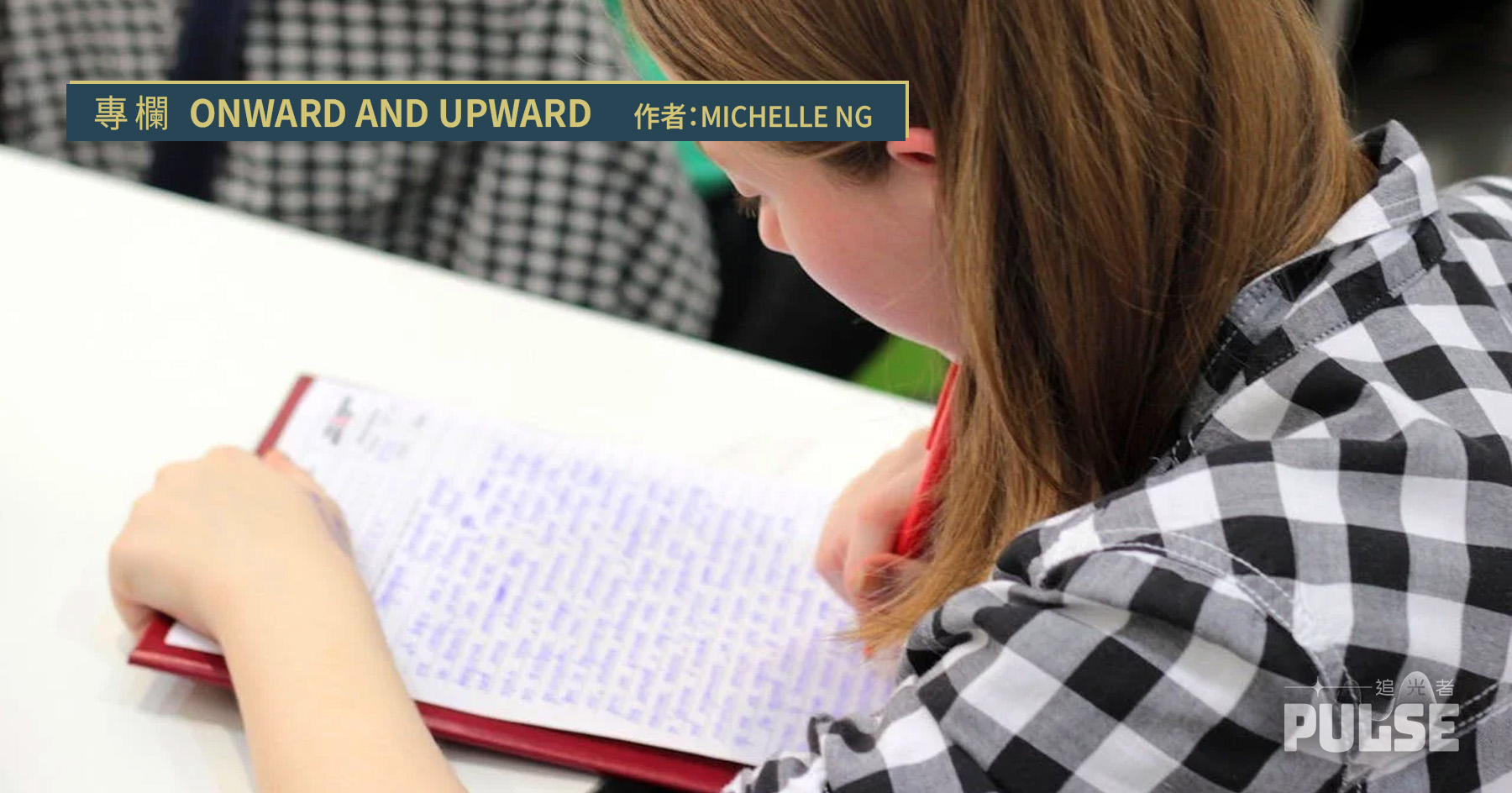
For many students applying to university next fall, December is the last month to work on their personal statements. For this week’s column, I’ve curated some of my best pieces on this form of writing. They address many of the most common problems I’ve seen in student-written drafts in all my years of tutoring. The principles that make a personal statement distinctive are the same ones that make a cover letter stand out, so my tips should inspire fresh thinking in job seekers as well.
“Try to include something unique and memorable about yourself”
“What are the things that make you interesting, special, or unique?”
“Stand out from the crowd by showcasing who you are and what you can bring to a university.”
“Try to include something unique and memorable about yourself. Admission teams receive thousands of applications each day, so give them a reason to read yours more than once.”
These are some of the personal statement writing tips provided by UCAS (the organization responsible for processing applications to UK universities) to students on its website
(https://www.ucas.com/
To give you some idea of the importance of showcasing one’s uniqueness, compare the following two personal statements. The first one contains many hollow, overused phrases frequently found in student writing (“deep passion for,” “enthusiasm for learning,” “unwavering perseverance”). The second offers glimpses of the student’s daily life and thoughts. Which one is more likely to leave a lasting impression?
First version
Hello. My name is Chan Siu Ming, and I’m from Hong Kong. I am currently a sixth former at ABC school. I have a deep passion for basketball and dentistry. The former has taught me the importance of collaboration. The latter fascinates me because I’m interested in helping people with their oral health and self-esteem. I believe I have what it takes to excel in dental school because my teachers have often remarked on my enthusiasm for learning and determination to follow through with my goals. Indeed, once I establish a goal, I will pursue it with unwavering perseverance, no matter how formidable the obstacles.
My version
The basketball team I joined when I was eight was so mediocre that even in my first training session with them, I was without a doubt its best player. Initially, I reacted the way most players in my situation would: already an expert dribbler,I kept the ball to myself during competitions, assuming if I passed it to my teammates, they would lose it to our opponents. Then the day came when I became curious about what would happen if I let them have the ball. I tested this idea, and the results stunned me. Before, my teammates had been intimidated by me; now they were thankful I was giving them a chance. The more they dribbled, the closer their skill levels matched mine, and the crowning moment was when our team came third in Hong Kong.
Since I began harbouring the dream of becoming a dentist, I’ve been making myself more attuned to every tiny detail of a dental clinic when I’m visiting one, and there, I observed a pattern that reminded me of my basketball experience. One dentist would talk to his staff in the same courteous tone he spoke to me; the vibe in his office was upbeat. In another office, when a young assistant handed over the scissors to the dentist with its blade facing him, he chided her as if he had time-travelled to ancient China and she were an indentured servant girl. I quickly made a mental note to myself: when I own my practice, I need to remember the precious lesson from the basketball court and will myself to trust staff who may not be 100% capable yet.
I’m under no illusion that studying dentistry is tough – and cosmetic dentistry, the field I’d like to specialise in, is even tougher – but among the things that will help me stay on course is my confidence in my aesthetic sense to be an outstanding creator of smiles. This confidence was instilled in me by my peers. I cut the hair of a couple of classmates after watching some TikTok videos and getting some tips from my barber, adapting what I learned to each classmate’s facial features. They became walking advertisements for my skills, and soon, other classmates began lining up to have their hair cut. Once I acquire ortho know-how from dental school, I will likewise exercise my aesthetic judgement when working on my first few cases, relying on their smiles to bring me more clients.
Personal Statements Dos and Don’ts
“Avoid saying you have read Stephen Hawking’s A Brief History of Time,” 一位在Bath University 負責錄取physics學生的教授,在“How to Write a Winning UCAS Personal Statement”一書中提醒,“we read this statement in a large fraction of our applications and it has become a kind of cliche which does not lift you above the crowd.”
的確,為申請大學寫personal statement,如果沒法 “lift oneself above the crowd,” 自己的申請表就容易埋藏在其他申請表的汪洋大海中。
那該怎樣突出自己?首先,如那位教授所說,要避免陳詞濫調。
After a long day of academic lessons, I always look forward to my training sessions in lacrosse. Not only are they enjoyable. They also provide me with the best opportunity to develop my ability to be a team player. As a result, I’ve managed to become a good listener.
“Teamplayer” 和 a good listener” 均屬於空泛的詞彙,每個人都能這樣形容自己。
學生可以嘗試引用比喻,通過比喻來刻畫自己玩 lacrosse的感受,
I wasn’t surprised when I found myself instantly drawn to David Attenborough’s video clips on wildlife, for I already had a working knowledge of the kind of strange exhilaration that overcomes a prey animal when it’s on the run. Every time I’m in a lacrosse match with the ball in my net and opposing team members glaring at me, I feel the nervous energy of a prey that has a fraction of a second to decide whether to hold on or pass. Unlike a lone prey in the wilderness, however, I have my teammates covering my back, and it’s by continually making the decision to pass the ball that I come to trust them and be trusted in return. As the youngest child in my family, accustomed to being the passive recipient of attention, I’ve come to love the way team sports draw me out of my shell.
Personal Statement SOS
For students aiming to enter university next fall, December is often the last month they have to work on their personal statements.
I’ve helped many students navigate the tricky business of personal statement writing. Among the most common pitfalls I’ve seen is a violation of the show, not tell principle. Obviously, mere awareness of this rule isn’t enough to instil the ability to craft words and phrases that come together in striking harmony. Still, with the right prompting, some imagination and lots of willpower, even the most wooden text can get the makeover it needs.
Below is a paragraph from a personal statement I found online (http://www.liuxuews.com/
The original text was written in response to this question:
What international/cross-cultural experiences will you bring to Brandeis International Business School and how will this contribute to the classroom?
Original version
As a result of my excellent academic performance, I was selected to study as an exchange student at Tokyo International Business College from October 2010 to March 2011. Despite of the language barrier, I adapted to the life and study there shortly because I tried my best to communicate with Japanese classmates and made friends with them. With this tip, I am confident that I can get familiar with my classmates in Brandeis International Business School in a short time.
My rewrite
Over the course of my six-month exchange program in Japan, I was often reminded of the fact that Eskimos have dozens of words for snow, for at times, it did seem the Japanese had just as many words for ‘no.” ううん (Uun) is a “no” that can only be used among intimates, 大丈夫です (daijoubu desu) is a formal way of rejecting someone, while 結構です (kekkou desu) is a casual, almost rude way of denying requests.
As I struggled to read the minds of my Japanese classmates, I felt like Alice in Wonderland overwhelmed by unfamiliar customs and coded behaviour. I soldiered on, however, and was duly rewarded. By the time I left the country, I had earned not only straight As, but Japanese drinking buddies, a stint as a mochi maker at a school fair, and enough fluency in Japanese to occasionally pass myself off as a local when I ordered at restaurants.
***
Michelle Ng
英國牛津大學畢業,前《蘋果日報》和《眾新聞》專欄作家,現在身在楓葉國,心繫中國大陸和香港。
聯絡方式: michelleng.coach@proton.me
個人網站: https://michellengwritings.com