

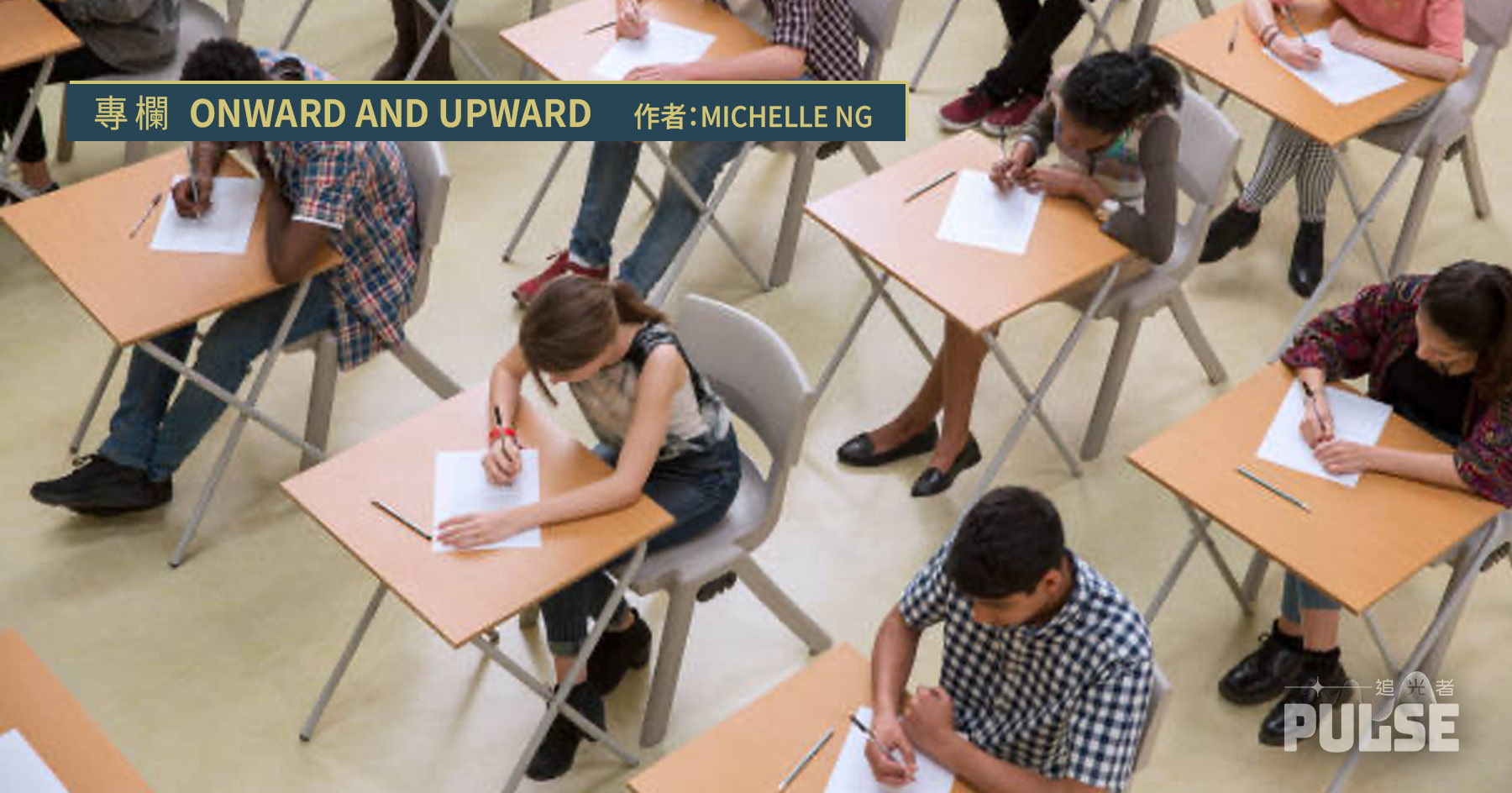
A summer camp welcomes both teenage boys and girls. As part of the camp experience, everyone is asked to write an essay on their feelings about summer. All the girls scribble quietly. The boys, however, are uniformly puzzled by the requirement to discuss their feelings. They rise up and, deciding to put their fire-making skills to good use, proceed to burn their worksheets, deriving more fun from this than they ever could have from completing the assignment.
This story, shared by a YouTube podcaster concerned about boys’ academic underperformance, was offered as an example of how the “feminization of education” – the idea that women’s predominance in teaching has led to evaluation methods misaligned with boys’ natural learning styles – can put boys at a disadvantage. The rise in disengaged male students in recent decades may be not so much their fault as the fault of education administrators who have failed to recruit enough male teachers.
Even before I had heard of the term “feminization of education,” I had long noticed in my capacity as a private writing coach how much more quickly my female students improve compared to their male counterparts. Whether it’s imitating the way I read, think, or write, the most intelligent and hardworking male student is no match for the most intelligent but laziest female student. But it is in reading comprehension that girls beat boys hands down. The literary technique an author uses can be staring a boy student in the face, yet he may still not detect it. Since exam systems generally place so much emphasis on reading and writing, it is no surprise that boys are lagging behind girls.
Sometimes, the exam questions themselves almost certainly require a female mind to grasp. An example is this reading comprehension passage from a GCSE English past paper. (https://www.expert-tuition.
‘Let me see how it looks on you,’ she said.
Rosabel turned to the mirror and placed it on her brown hair, then faced them.
‘Oh, Harry, isn’t it adorable,’ the girl cried, ‘I must have that!’ She smiled again at Rosabel.
‘It suits you, beautifully.’
A sudden, ridiculous feeling of anger had seized Rosabel. She longed to throw the lovely, perishable thing in the girl’s face, and bent over the hat, flushing.
It doesn’t surprise me at all that all my male students are at a loss when asked by the GCSE exam paper whether Rosabel has the right to be angry. Can anyone expect the typical teenage boy to understand the paradoxes of the female mind (women compete with each other for men but primarily dress for each other) and the peculiar way women reason (they size up each other and immediately know where they stand on the attractiveness scale)? Yet, without a passing familiarity with these matters, he probably wouldn’t understand Rosabel’s anguish. The client must have asked Rosabel to model the hat because they share some similarities in appearance. This embitters Rosabel because she has to earn her own bread while the other girl manages to trade her looks for an easy life.
Despite thirty years of research, Freud still had to concede he had no satisfactory insight into “the great question that has never been answered”: “What does a woman want?” If the nature of the feminine soul has eluded even the founder of psychoanalysis, how can one expect it not to baffle a 16- or 17-year old boy?
***
Michelle Ng
英國牛津大學畢業,前《蘋果日報》和《眾新聞》專欄作家,現在身在楓葉國,心繫中國大陸和香港。
聯絡方式: michelleng.coach@proton.me
個人網站: https://michellengwritings.com